


Editor Reviews
The emergence of artificial intelligence in the art world has sparked a revolution, democratizing the creation of art and enabling individuals from all backgrounds to engage in artistic expression. Sketch AI - Drawing To Art exemplifies this trend by allowing users to convert their basic sketches into elaborate artworks. This tool leverages advanced machine learning algorithms to interpret user inputs and generate visually appealing images that can rival traditional artistic techniques.
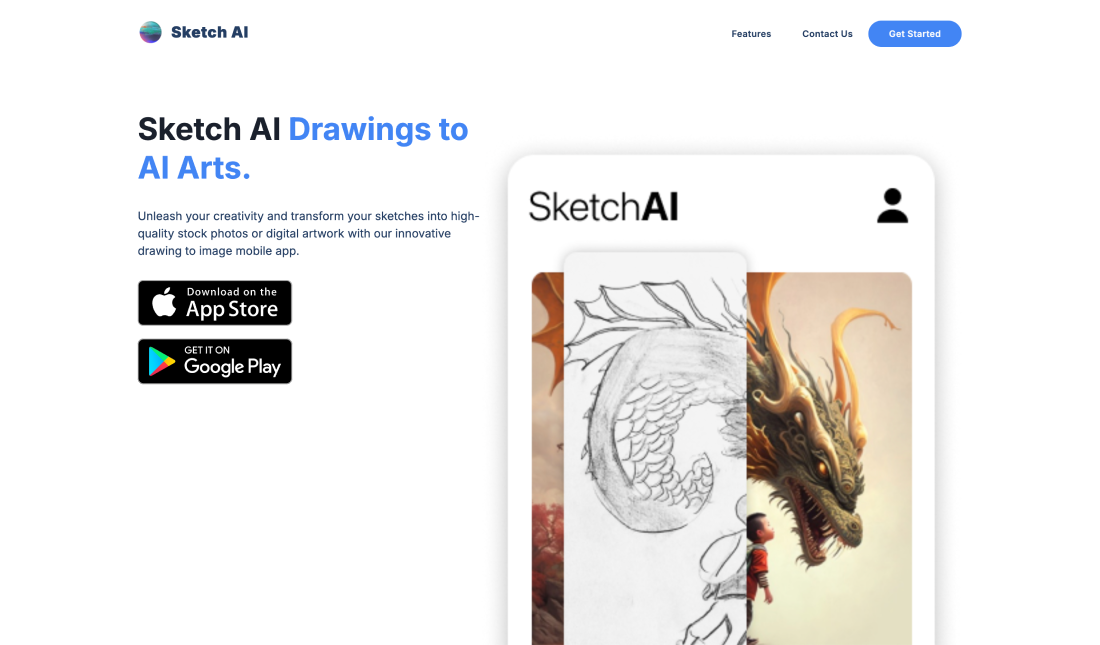
The process begins with users uploading their sketches or drawings. The AI then analyzes these inputs, utilizing a vast database of artistic styles and techniques to enhance and transform the original sketch. This capability not only saves time but also provides a platform for those who may lack formal artistic training to create professional-looking art. The implications of such technology are profound, as it challenges the traditional boundaries of artistry and opens new avenues for creativity.
Moreover, Sketch AI serves as a bridge between technology and art, encouraging collaboration between human creativity and machine learning. Users can explore various artistic styles, experiment with different color palettes, and even adjust the level of detail in their creations. This flexibility empowers users to personalize their artworks, making the tool not just a means of creation but also a source of inspiration.
As AI tools like Sketch AI continue to evolve, they raise important questions about the nature of creativity and the role of artists in a technology-driven world. While some critics argue that AI-generated art lacks the emotional depth and intentionality of human-created works, proponents highlight the potential for AI to augment human creativity rather than replace it.
As a matter of fact, using Sketch AI for me was also a straightforward and enjoyable experience. The user interface is intuitive, making it accessible even for those unfamiliar with digital art tools. Upon uploading a simple sketch, the transformation process was quick, with the AI generating multiple artistic interpretations within seconds. This rapid feedback loop allowed for immediate exploration of different styles, which was particularly engaging.
Besides, another notable aspect of Sketch AI is its ability to learn from user preferences. As users interact with the tool, it adapts to their artistic choices, refining its outputs based on previous selections. This feature enhances the personalization of the art creation process, making each user’s experience unique.
The quality of the generated art was impressive, with the AI successfully capturing the essence of the original sketch while adding depth and vibrancy. Users can choose from various artistic styles, including impressionism, abstract, and realism, which broadens the creative possibilities. However, while the results were often stunning, there were instances where the AI struggled with more complex sketches, leading to outputs that deviated from the user’s original intent.
Additionally, the tool includes options for fine-tuning the generated images, allowing users to make adjustments to color, texture, and detail. This level of control is beneficial for artists looking to achieve a specific vision, although it may require some experimentation to master.
Features
1. Designed for ease of use, allowing anyone to create art without prior experience.
2. Transforms sketches into art within seconds, providing quick feedback for creative exploration.
3. Offers multiple artistic styles, enabling users to experiment with different aesthetics.
4. The AI learns from user interactions, improving its outputs based on individual preferences.
5. Users can adjust colors, textures, and details to refine their artwork further.
Advantage
1. Empowers individuals without artistic training to create high-quality art.
2. Significantly reduces the time needed to produce professional-looking artwork.
3. Encourages experimentation with various styles and techniques, fostering creativity.
4. Adapts to user preferences, making the art creation process unique for each individual.
Shortcoming
1. May struggle with intricate sketches, leading to less satisfactory results.
2. Quality of output heavily relies on the initial sketch provided by the user.
3. While the interface is user-friendly, mastering all customization options may take time.
4. Some users may find that the AI-generated art lacks the uniqueness of human-created pieces.