


Editor Reviews
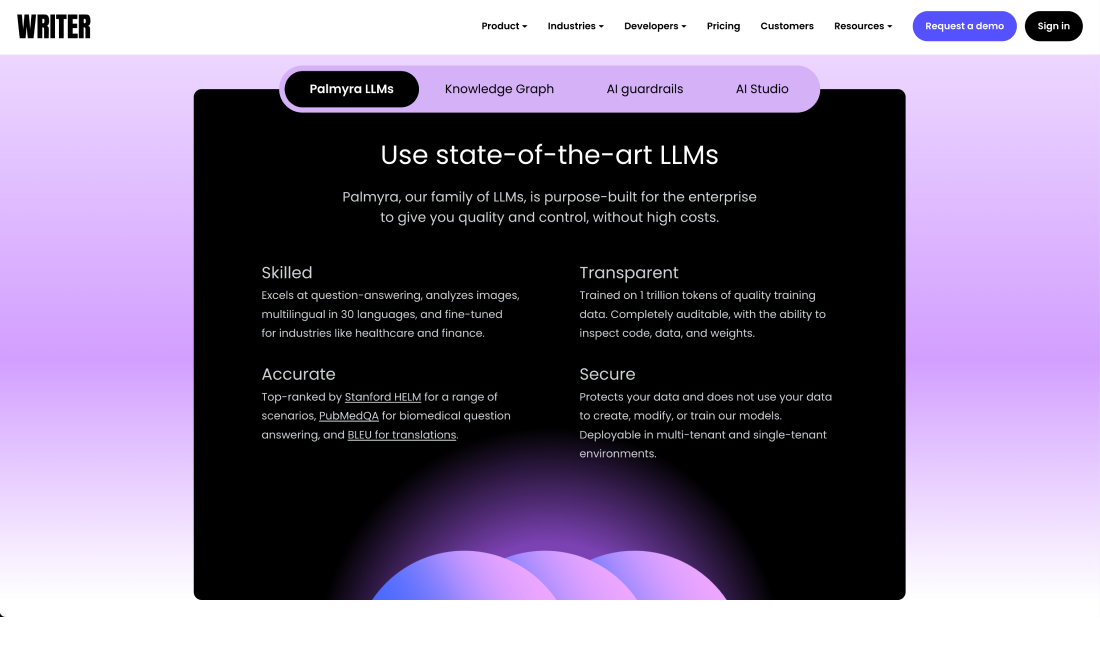
In the rapidly evolving landscape of technology, artificial intelligence (AI) tools have made a significant impact across various sectors, driving efficiency and innovation. Among these tools, Writer has emerged as a solution specifically designed to facilitate enterprises in building generative AI applications. The adoption of these applications is crucial for businesses aiming to stay competitive in an era where AI integration is more than just a trend—it’s a necessity. As global enterprises strive to harness AI for improved productivity, Writer has positioned itself as a leader by making AI accessible for over 1 million users in their daily tasks.
The journey of AI integration into enterprises has been filled with challenges, ranging from high implementation costs to the need for technical expertise. Writer seeks to address these issues by providing a platform that simplifies the development of generative AI applications — tools that can generate content, ideas, or solutions autonomously. This platform not only cuts down the complexity traditionally associated with AI implementation but also reduces the entry barriers for businesses of all sizes, thereby democratizing access to advanced AI capabilities.
Writer’s influence stretches beyond just providing a platform. It aligns with broader trends in AI usage, where companies are increasingly turning to artificial intelligence to automate routine tasks, analyze substantial datasets, and enhance decision-making processes. By streamlining the process of building AI applications, Writer encourages enterprises to integrate AI more effectively into their operations, thus enabling them to respond better to market demands and operational challenges.
The success of Writer is evidenced by its rapid adoption among users worldwide. The tool’s user-centric design ensures it is accessible to individuals without deep technical knowledge, making it a versatile solution across different industries. Its focus is not solely on the technological prowess of AI but also on its practical applicability in enhancing workplace productivity and efficiency. Writer embodies a bridge between complex AI technologies and everyday business processes, making it an invaluable asset in a company’s digital transformation journey.
In conclusion, Writer represents a significant advancement in the realm of AI for business, making it not only accessible but also practical for a range of enterprises. Its strengths, particularly in accessibility and efficiency, highlight its advantages, though there are areas like advanced feature availability and data dependency that require careful consideration. Overall, Writer is a powerful tool that facilitates the integration of generative AI into everyday enterprise functions, exemplifying the transition towards more intelligent and automated business processes.
Features
1. Writer is utilized by over 1 million users, showcasing its wide acceptance and reliability in diverse work environments.
2. The platform is recognized for its simplicity, enabling users without technical backgrounds to build and deploy AI applications swiftly.
3. Writer allows enterprises to scale their AI applications according to their specific needs, supporting both small-scale and extensive operations.
4. It offers customizable options to tailor the AI applications to fit different business models and use cases, enhancing its versatility.
5. Writer seamlessly integrates with existing enterprise systems, ensuring a smooth operational workflow transition.
Advantage
1. It lowers the barrier to AI adoption by providing a user-friendly interface for non-technical users.
2. Writer significantly speeds up the development process of AI applications, thereby increasing productivity.
3. The tool offers a cost-efficient solution for enterprises to leverage AI without incurring substantial financial investments.
4. Writer provides extensive support and resources for users, ensuring effective utilization and troubleshooting capabilities.
Shortcoming
1. While excellent for basic use, Writer may lack some advanced functionalities required by highly specialized industries.
2. Performance can be heavily dependent on the quality of data fed into the system, requiring high-quality data management.
3. Although it integrates well with many systems, there might be compatibility issues with less common enterprise infrastructures.
4. As with any AI platform, there may be concerns regarding data security and privacy, necessitating robust safeguards.