


Editor Reviews
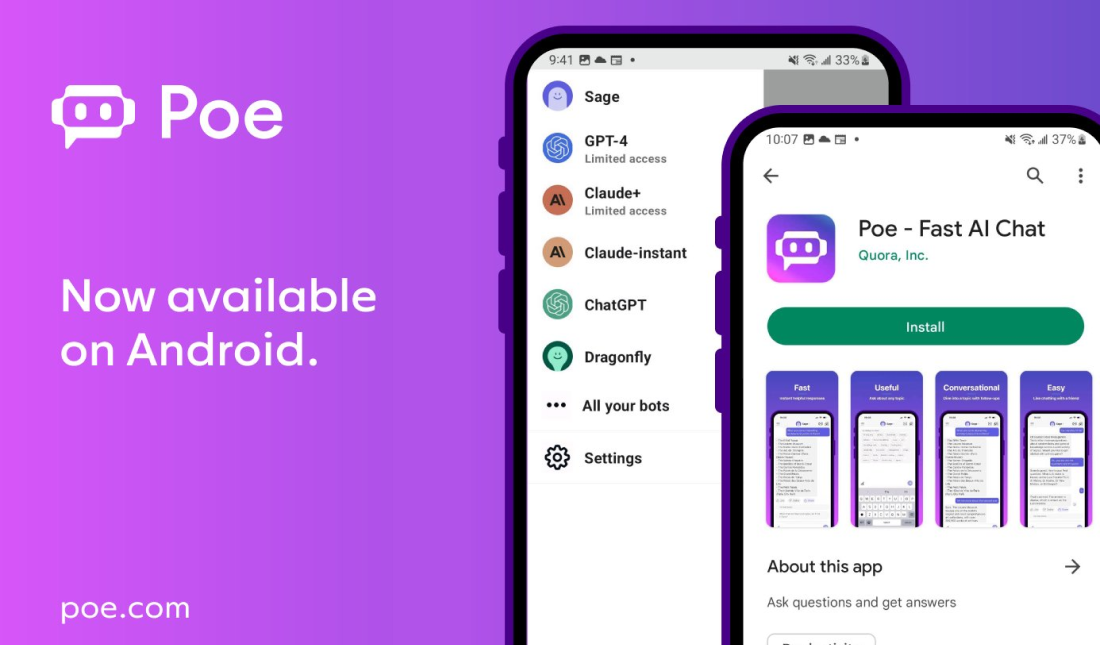
Quora Inc.’s foray into the burgeoning field of artificial intelligence comes in the form of Poe, a platform designed to redefine how users interact with AI-driven chatbots. Launched in February 2023, Poe stands as an ambitious attempt to bring together multiple large language models under one roof, offering everyday users seamless access to conversational AI technology. As the platform name suggests, Poe – Platform for Open Exploration – aims to facilitate open-ended exploration and inquiry by allowing users to engage with several AI models through one streamlined interface.
The allure of Poe lies in its ability to connect with various prominent AI models such as OpenAI’s GPT-4 and Claude from Anthropic, each renowned for their sophisticated natural language processing capabilities. This integration is intended not only to enhance the utility of AI models but also to cater to a diverse range of user inquiries and needs. By permitting users to switch between different AI models, Poe offers an interactive dimension where users can tailor the assistance according to their preferences, whether it involves creative writing, data analysis, or straightforward Q&A sessions.
Prominent among its features is the platform’s ability to accommodate back-and-forth conversations, allowing users to engage in more dynamic and interactive exchanges with AI bots. These exchanges serve to mimic natural human conversations, thereby enhancing user satisfaction as well as the depth and breadth of information exchange. The platform’s capability is further underscored by the fact that users can create custom bots using prompts, making the experience highly personalized without the need for extensive technical know-how. In essence, Poe provides an environment that democratizes access to artificial intelligence by lowering the entry barriers for users of varying technical backgrounds.
Furthermore, the presence of community-driven elements, wherein users can develop and share their customized bots, enriches Poe’s ecosystem. This not only transforms the user experience but also fosters a collaborative community where users can learn from and contribute to each other’s AI explorations. With numerous tools at their disposal, Poe users can experiment with a wide array of bots, making it a sandbox for creative and practical applications alike.
In a word, Quora’s Poe represents a significant step forward in democratizing access to sophisticated AI technologies. By integrating various AI models and offering users the ability to personalize their interactions, Poe not only enhances the conversational capabilities of its bots but also provides a platform that encourages exploration and creativity. Despite some areas needing further development, Poe’s innovative features and approach position it as a promising player in the rapidly evolving field of artificial intelligence chatbots.
Features
1. Poe combines different AI models like GPT-4 and Claude, allowing users to choose and switch between them effortlessly.
2. Users can craft tailored AI experiences by creating their own bots with specific prompts and guidelines.
3. The platform offers real-time dialogue through various AI bots, enhancing engagement and utility.
4. Back-and-forth interactions with AI-powered bots enable users to receive nuanced responses.
5. Designed for ease of use, Poe simplifies navigation and interaction without needing advanced technical skills.
Advantage
1. Users have the flexibility to interact with multiple AI models, each with unique strengths, allowing customized experiences.
2. Community-driven features allow users to share and replicate bots, facilitating collective learning and exploration.
3. Interactive and back-and-forth exchanges mimic natural conversations, improving user satisfaction.
4. Even users with limited technical expertise can create personalized bot experiences through simple prompts.
Shortcoming
1. Relying on third-party AI models can limit Poe’s capabilities compared to standalone sophisticated bots.
2. Being in beta, some features might lack the refinement and stability users expect, affecting overall performance.
3. Differences in bot performance and response quality may lead to uneven user experience.
4. Advanced features and models can incur additional costs, potentially limiting access for users on a budget.