
Editor’s Review
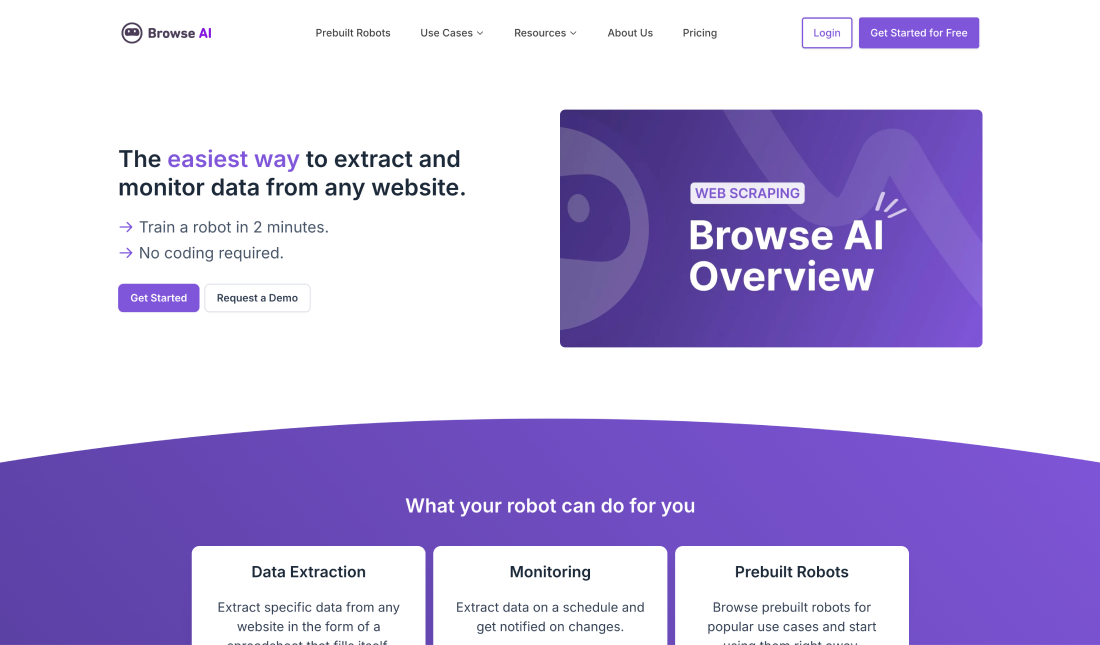
Browse AI is a cutting-edge AI-driven navigational tool that harnesses the power of machine learning and natural language processing to deliver an unparalleled user experience. It is more than just a search engine; it's an intelligent companion that understands user intent, learns from behavior patterns, and curates content that resonates with individual preferences.
The inception of Browse AI was rooted in the need to streamline the online discovery process. With the exponential growth of the internet and the overwhelming amount of data generated every second, traditional search methods were becoming increasingly inadequate. Browse AI was developed to address this gap, offering a solution that simplifies the complexity of finding what users truly seek.
At the key of Browse AI lies its ability to learn and adapt. The AI tool continually evolves with user interactions, refining its algorithms to provide more accurate and relevant results. It can understand complex queries. Browse AI processes complex search queries, offering insights that traditional search engines often miss. And it can also personalizes content delivery by leveraging user data and behavior, ensuring that users receive a tailored experience.
The introduction of Browse AI has redefined the concept of user experience. It has transformed the way users interact with digital platforms, making it more intuitive and engaging. Users are no longer passive recipients of information; they are active participants in a dynamic exchange of ideas and content.
In short, Browse AI is not just a tool; it's a harbinger of a new era in digital interaction. It represents the convergence of technology and user-centric design, offering a glimpse into a future where AI is an integral part of our daily online activities. As we step into this new realm, Browse AI stands ready to navigate the complexities of the digital world, ensuring that the journey is as enriching as the destination.
Features
1. Natural Language Processing (NLP): Browse AI utilizes NLP to interpret human language, allowing users to interact with the tool as they would in a normal conversation.
2. Personalization: The tool learns individual user preferences and tailors search results accordingly, creating a more personalized experience.
3. Predictive Text and Suggestions: As you type, Browse AI predicts what you're looking for and offers suggestions, saving time and effort.
4. Cross-Platform Compatibility: Browse AI is designed to work seamlessly across various devices and platforms, from desktops to mobile phones.
5. Semantic Search: The tool understands the context and intent behind search queries, providing more meaningful results.
6. User Feedback Integration: Users can provide feedback on search results, which the AI uses to refine and improve future searches.
7. Data Privacy: Browse AI places a strong emphasis on user privacy, ensuring that personal data is securely handled and protected.
Pros
1. Efficiency: The AI's ability to predict and understand user needs can significantly reduce the time spent searching for information.
2. Accuracy: With its advanced algorithms, Browse AI can provide highly relevant search results, increasing the likelihood of users finding exactly what they're looking for.
3. User Experience: The conversational interface of Browse AI makes the search process more engaging and less technical, appealing to a broader audience.
4. Continuous Learning: As Browse AI learns from user interactions, it continually improves, offering a dynamic and evolving search experience.
5. Customization: The personalization feature ensures that each user gets a unique experience tailored to their preferences and habits.
Cons
1. Privacy Concerns: Despite Browse AI's commitment to privacy, some users may still be wary of the amount of personal data an AI tool collects to function effectively.
2. Potential for Bias: Like all AI, Browse AI may inadvertently reflect biases present in its training data, which could affect the diversity of search results.